
SOC Analyst Roadmap: Skills, Tools, and a 90-Day Practice Plan
Updated on May 06, 20268 min read
A SOC Analyst role is one of the most practical ways to break into cybersecurity, especially if you're changing careers or building skills alongside a full-time job. The challenge is that most beginners do not know what to learn first, which tools actually matter, or how to practice in a way that looks credible to employers.
This roadmap gives you a clear learning sequence, a realistic tool stack, and a 90-day practice plan that builds job-ready ability step by step. You'll focus on fundamentals, hands-on investigations, and portfolio-ready write-ups that show you can do SOC work.
What a SOC Analyst Does (And Why It's a Smart Entry Point)

A Security Operations Center (SOC) monitors systems, networks, and endpoints for signs of attacks. SOC Analysts investigate alerts, separate real issues from noise, and help stop incidents before they become major breaches.
This role is a strong entry point because you learn real-world security workflows quickly. You will work with logs, detections, endpoint data, and threat intelligence every week, building a foundation for roles like incident response, threat hunting, or cloud security.
SOC Analyst tiers in simple terms
Most SOC teams have different levels of responsibility. Tier 1 focuses on alert triage and initial investigation, while Tier 2 handles deeper analysis and response steps, and Tier 3 often includes threat hunting and detection engineering. If you're aiming for your first job, your target is usually Tier 1. The roadmap in this article is built to make you effective at Tier 1 and ready to grow into Tier 2 skills over time.
The Skills That Make Up a Strong SOC Analyst Roadmap
SOC analysts do not succeed by memorizing random tools. They succeed by understanding how systems behave, how attacks show up in logs, and how to follow a repeatable investigation process. The best way to learn is to build fundamentals first, then apply them through real practice. That is why this roadmap prioritizes networking, operating systems, log analysis, and clear reporting before advanced specializations.
Networking fundamentals you actually need
SOC work constantly involves reading traffic behavior and figuring out whether it makes sense. If you cannot interpret a suspicious connection or explain why DNS matters, investigations become guesswork. Start with IP addressing, TCP vs UDP, and common ports like 80, 443, 53, 22, and 3389. Learn how DNS requests work, what HTTP status codes mean, and why proxies or VPNs can change what you see in logs.
Windows fundamentals for SOC investigations
Many organizations are Windows-heavy, so understanding Windows logs is a big advantage. You do not need to be a Windows admin, but you do need to recognize authentication events and suspicious behavior patterns. Get familiar with Event Viewer, Security logs, and the idea of "who did what, from where, and when." Learn common artifacts like scheduled tasks, services, and basic registry concepts tied to persistence.
Linux fundamentals for SOC investigations
Linux appears everywhere in modern tech, from servers to containers and cloud environments. SOC analysts often investigate SSH logins, suspicious processes, and unexpected network connections on Linux hosts. Learn essential commands like ps, top, journalctl, grep, and ss. Focus on reading auth logs and building the habit of quickly checking users, processes, and network activity in a structured way.
Log analysis mindset: the skill that unlocks tools
SIEM platforms, EDR consoles, and dashboards are only useful if you can interpret the data they provide. Your real power comes from being able to turn log fragments into a narrative you can defend with evidence. Train yourself to ask investigative questions like: "Is this login normal for this user?" "What happened right before the alert?", and "What changed on the machine?" This mindset makes every tool easier to learn.
Security fundamentals and attack stages
You'll investigate better when you understand what attackers try to achieve. Even basic knowledge of phishing, malware behavior, and credential abuse will help you recognize patterns faster. Learn the stages of an attack using simple frameworks like the Kill Chain or MITRE ATT&CK. Focus on tactics like initial access, execution, persistence, privilege escalation, and command and control.
Basic scripting to speed up your work
You do not need to be a programmer, but you should be able to automate small tasks. Scripting helps you parse logs, clean data, and move faster during investigations. Start with Python for JSON, regex, and log parsing. Add basic Bash for Linux workflows, and learn enough PowerShell to understand common commands that appear in Windows security incidents.
Documentation and communication skills
SOC work is teamwork, and teams need clear notes. If your ticket updates are confusing, incidents take longer to resolve, and senior analysts cannot trust your triage. Practice writing short, structured summaries with facts, impact, evidence, and next steps. Strong communication makes you look experienced even as a junior candidate.
SOC Analyst Tools to Learn (In the Right Order)
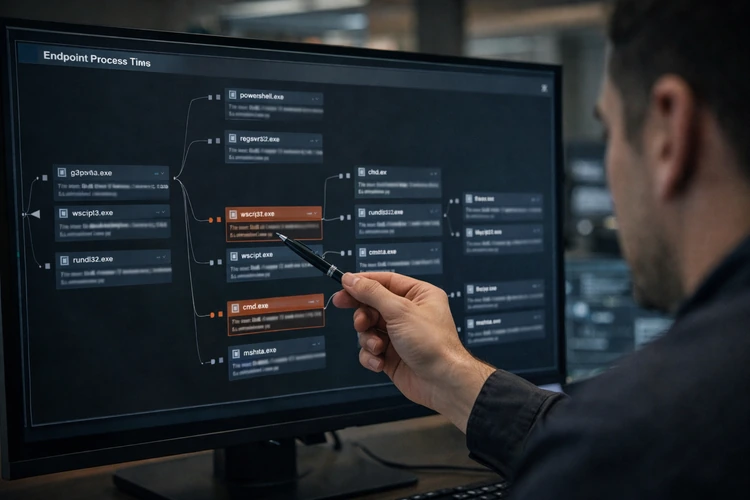
Tools vary between companies, but the workflow is consistent: monitor, investigate, enrich, document, and respond. Learning tools in the right sequence prevents overwhelm and helps you connect the dots.
Your goal is not to master every platform. Your goal is to be comfortable with the categories of tools SOC teams use and understand what each tool is meant to answer.
SIEM tools: your investigation search engine
A SIEM collects logs and helps analysts search, correlate, and alert on suspicious behavior. In many SOC roles, SIEM time is a big part of your day because it's where alerts and investigations begin. Popular SIEMs include Splunk, Microsoft Sentinel, Elastic, and QRadar. Focus on building queries, filtering by time and host, and learning to pivot from one clue to the next.
EDR/XDR tools: what happened on the endpoint
EDR platforms show process activity, network connections, file changes, and more on laptops and servers. These tools are often where you confirm whether an alert is real and how far it has spread. Learn to read process trees, identify suspicious parent-child relationships, and interpret command-line activity. You should also understand basic containment actions like isolation and quarantine at a high level.
Network analysis tools: proving suspicious traffic

Network tools help you validate what's happening across connections, protocols, and domains. Even basic PCAP analysis can help you confirm malware downloads, beaconing, or unusual DNS behavior. Wireshark is a strong starting point because it teaches you how to interpret raw network evidence. Learn how to follow streams, identify DNS queries, and spot repeating patterns that do not look normal.
Threat intelligence tools: context for your indicators
Threat intel enrichment helps you understand whether an IP, domain, or hash is known for malicious behavior. It also helps you prioritize which alerts require urgent attention. Use tools like VirusTotal, AbuseIPDB, and vendor advisories to enrich indicators. Learn the difference between "reputation suggests risk" and "evidence confirms compromise," so you avoid false conclusions.
Ticketing and case management tools
SOC work is documented through tickets, case notes, and incident reports. Employers want analysts who can keep clean timelines and provide clear escalation notes. Practice writing updates that include what you checked, what you found, and what you recommend. Good documentation makes your work usable to the rest of the security team.
SOAR: automation basics
SOAR tools automate repetitive tasks like enrichment, alert grouping, and response playbooks. You do not need deep SOAR expertise at the beginning, but you should understand why automation matters. Learn what a playbook is, what steps can be automated, and how mistakes can scale if false positives trigger automated actions.
How to Build a Home SOC Lab Without Overcomplicating It
A home lab helps you practice investigations without waiting for real-world access. The best lab is simple enough to maintain and structured enough to repeat experiments.
You can build a lab with one Windows VM, one Linux VM, and a place to collect logs. Your goal is to generate activity, collect evidence, and practice telling the story.
A practical starter lab setup
Use VirtualBox or VMware Player and create a Windows VM and a Linux VM. If your machine can handle it, add a third VM for log collection or a lightweight SIEM option.
What you should do in your lab each week
Generate logins, failed logins, installs, and simple scripts, so you have data to investigate. Capture a small PCAP and practice tracing a web request or DNS lookup. Write down what you did and what it means.
Portfolio Projects That Actually Help You Get a SOC Interview
A SOC portfolio should show how you think under uncertainty. Aim for 3 to 5 artifacts.
Project 1: SIEM-style investigation case study
Project 2: Build three basic detections
Project 3: PCAP analysis report
Project 4: Threat intel enrichment workflow
The 90-Day Practice Plan
Days 1–30: Fundamentals
Days 31–60: SIEM and detections
Days 61–90: Incident response and portfolio
If you want a more structured route, a bootcamp can reduce guesswork and keep you accountable. This matters a lot when you're balancing learning with work, family, or other responsibilities.
With Code Labs Academy, learners can build job-ready skills through guided learning and hands-on practice, develop portfolio projects that demonstrate ability, and access career support like mentoring and interview preparation through the Career Services Centre.
Conclusion
Becoming a SOC Analyst is about structure, not randomness. Build fundamentals, practice investigations, and document everything.
If you follow the 90-day plan and produce portfolio artifacts along the way, you'll be able to show employers what you can do. If you want guided training, mentorship, and career support, explore Code Labs Academy programs and apply to start building your cybersecurity career with structure and support.

Learn In-Demand Tech Skills Online with Code Labs Academy
Join our supportive online community, build job-ready skills, and take the next step in your tech journey, whether you’re getting started or upskilling in your current role.
Apply Now