Top 5 Coding Books for Beginners in 2026
Updated on December 18, 20254 minutes read
Linus Torvalds, "Most good programmers do programming not because they expect to get paid or get adulation by the public, but because it is fun to program."
Learning to code is hands-on, but reading can fill in the parts that tutorials often skip. A good book slows the pace down, explains trade-offs, and gives you language for problems you will meet again (and again).
This 2026 list focuses on foundations: debugging, readable code, and habits that make software easier to change over time. You do not need to read all five; pick one that matches your stage, then apply it right away to a small project.
Why these books still matter in 2026
Frameworks change quickly. The skills that last are the ones that help you reason about code: naming, testing, refactoring, and diagnosing what went wrong when something breaks.
Each book below supports the same goal from a different angle: write code that works today, and can still be understood later by you, a teammate, or an open-source contributor.
How to get value from a coding book without stalling progress
Read with a "do the next small thing" mindset. After a chapter, pick one idea to apply: rename a messy function, add a test, or simplify a conditional you have been avoiding.
A simple rhythm works well for most beginners: 20 to 30 minutes of reading, then 30 to 60 minutes of practice. That feedback loop is what turns advice into skill.
A note on language examples
Some books use specific languages in their examples. That is fine. Focus on the principle, then translate it into what you are learning (JavaScript, Python, Java, or something else).
The 5 best coding books for beginners
1) Zero Bugs and Program Faster by Kate Thompson
Early on, it is normal to feel like errors come from nowhere. This book helps you spot common bug patterns sooner and build habits that reduce avoidable mistakes while you learn.
Use it as a practical guide, not a promise of perfection. You are aiming for faster debugging, clearer checks, and smaller changes that are easier to verify.
Best for: your first projects, when you are learning what bugs usually look like and how to recover quickly.
2) The Self-Taught Programmer: The Definitive Guide to Programming Professionally by Cory Althoff
If you are learning outside a traditional computer science degree, this book connects fundamentals to job-ready habits. It leans on Python for examples, but the bigger value is the structure: Practice, projects, and interview preparation.
Read it alongside a course or bootcamp so you can ship exercises as real portfolio work. Progress feels more concrete when your reading produces something you can show.
Best for: moving from "I can follow a tutorial" to "I can build and explain a small app end to end."
3) Clean Code: A Handbook of Agile Software Craftsmanship by Robert C. Martin
Clean Code is about writing software that other people can understand, and that you can maintain. It covers naming, functions, classes, code smells, and refactoring habits that reduce complexity.
It is not a first-week book. Start it once you have written enough code to notice the pain of messy files, duplicated logic, or tests that are hard to read.
Best for: your second phase of learning, when you want your code to be clearer, more consistent, and easier to change.
4) Working Effectively with Legacy Code by Michael Feathers
Sooner or later, you will work on code you did not write, at work, in open source, or in an older personal project. This book shows how to make changes safely, even when there are few tests.
Expect to re-read sections. The core idea is to create seams so you can add tests, isolate behavior, and improve the code without breaking what users already rely on.
Best for: anyone who has to modify an existing project and feels nervous touching it.
5) The Pragmatic Programmer: Your Journey to Mastery by Andrew Hunt and David Thomas
This is a broad toolkit: personal responsibility, communication, debugging, estimation, and building maintainable systems. It works well in small chunks, so you can revisit a section when you need it.
Best for: building long-term habits that keep you effective across languages and frameworks.
Suggested reading order based on where you are
Brand new to coding: Start with Zero Bugs and Program Faster, and The Self-Taught Programmer.
You can build small apps: Add Clean Code to improve readability and structure.
You are maintaining an older codebase: Reach for Working Effectively with Legacy Code.
Any stage: Keep The Pragmatic Programmer nearby for repeat reference.
Want structure and feedback while you learn?
Books are powerful, but guidance and community can speed up your learning. Code Labs Academy offers beginner-friendly bootcamps in Data Science & AI, Cybersecurity, Web Development, and UX/UI Design.
If you want to compare learning paths or get help picking a starting point, you can talk to the team or join a workshop to experience the teaching style.
Get personalised advice: Contact Code Labs Academy Learn with a live session: Free Tech Workshops
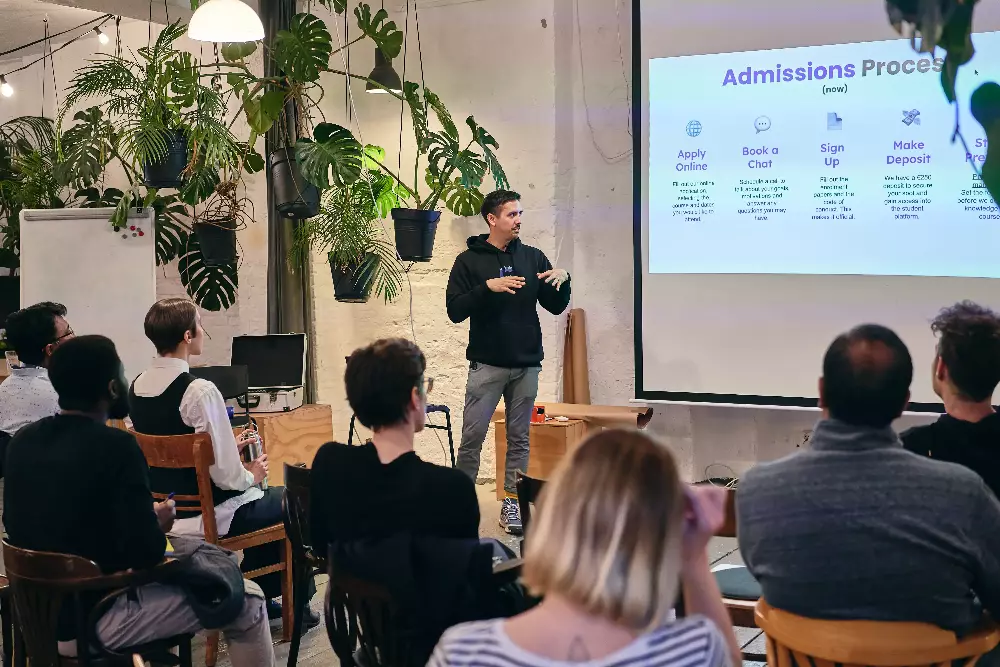
Learn technical skills online with Code Labs Academy
Join our supportive community, unlock your potential, and embark on a rewarding career path.
Apply Now