
Deep Reinforcement Learning for Demand Response with PyTorch: From MDP Design to Stable Training
Updated on February 21, 202619 minutes read
Demand response (DR) is one of the fastest ways to make power systems more flexible without waiting years for new grid infrastructure. Instead of “always consuming now,” DR shifts or curtails load when the grid is stressed, prices spike, or carbon intensity is high.
Technically, DR is a sequential control problem with uncertainty, delays, and constraints. That’s exactly where reinforcement learning (RL) fits, especially deep RL, where the “state” includes time series like prices, weather, and telemetry.
The domain angle matters here: DR is not just software optimization. It sits at the intersection of climate policy (emissions), economics (tariffs and incentives), and human factors (comfort, consent, and reliability).
This article is written for intermediate-to-advanced learners and career-switchers who already know Python and basic ML. If you want serious depth on designing an MDP and training stable deep RL agents in PyTorch, you’re in the right place.
After reading, you’ll be able to design a DR problem as a Markov Decision Process (MDP), shape rewards without “reward hacking,” and implement a working DQN agent in PyTorch. You’ll also know what makes training unstable in real DR settings and which engineering fixes actually help.
Background and prerequisites
Prerequisites you should have
You should be comfortable writing Python functions and classes, and using NumPy/Pandas for tabular and time-series data. You should also know how gradient-based training works at a high level (losses, optimizers, overfitting).
On the math side, you don’t need advanced theory, but you should understand expectations, variance, and basic linear algebra. If you’ve trained a neural network before, you already have the intuition you need for this guide.
For PyTorch, you should recognize nn.Module, tensors, and the idea of backprop through a loss. We’ll write enough code that you can run it, modify it, and use it as a template for your own DR experiments.
Demand response concepts (the domain layer)
Demand response reshapes electricity consumption so that it better matches supply. In practice, this might mean reducing load during peak hours, pre-cooling buildings before expensive hours, or scheduling EV charging overnight.
The “why now” is tied to the energy transition. More solar and wind increase variability, and electrification increases demand, so flexibility becomes both a reliability tool and a climate lever.
DR also has a public policy and market design component. Tariffs, demand charges, and event-based programs define what “optimal” means and what constraints must be respected.
Key RL concepts we’ll use (the tech layer)
Reinforcement learning models involve repeated interaction with an environment. At each step, an agent observes a state, takes an action, receives a reward, and transitions to a new state.
Deep RL uses neural networks to approximate value functions or policies when the state is complex. In demand response, complexity often comes from time series, partial observability, and delayed physical effects like thermal inertia.
We’ll focus on DQN-style value-based learning for a discrete control example because it’s a practical entry point. We’ll also discuss when actor–critic methods (PPO/SAC-style) are the better fit for continuous control.
Core theory and intuition: from MDP design to learning signals
The MDP: what it is and why it matters in DR

The formal MDP definition is compact, but it hides most of the real design work:
Here, is what the agent observes, is what it can do, is how the world evolves, is what you optimize, and discounts future rewards. In DR, each of these has physical meaning and operational consequences.
A common applied RL failure mode is treating the MDP as “just a wrapper around data.” In demand response, a bad MDP design can produce unsafe, unfair, or economically meaningless policies.
State design: making the problem learnable without leaking the future
The state should include enough information to choose a good action, but not information that wouldn’t be available at decision time.
If you leak future price or future temperature, you train a policy that cannot exist in the real world.
In DR, time-of-day and day-of-week are usually essential because tariffs and carbon intensity follow periodic patterns. Cyclical encodings (sine/cosine) often learn better than raw integers because they represent wrap-around smoothly.
You typically include market or grid signals such as current price, a day-ahead price vector, or a DR event flag. If carbon-aware control is part of the goal, you include carbon intensity signals too, ideally, forecasts if you plan to run live.
Internal system dynamics must appear in the state. For HVAC, that’s indoor temperature; for batteries, it’s state-of-charge; for EVs, it’s remaining energy and time to deadline.
Many DR problems are partially observable in practice. Occupancy and manual overrides make “true state” unavailable, so you approximate Markov behavior with lag features or short histories.
Action space: the algorithm choice is often decided here
If actions are naturally discrete (like “charging off / low/medium/high), value-based methods like DQN are a strong baseline. This is especially true early on when stability and debuggability matter more than perfect smoothness.
If actions are continuous (like battery dispatch power in kW), actor–critic methods become more natural. You can discretize continuous actions, but discretization can waste flexibility and create brittle threshold behavior.
A practical compromise is to train continuous policies but enforce actuator limits through a projection step. That step is domain-driven because it encodes equipment constraints, warranty rules, and comfort requirements.
Reward design: where economics, comfort, and climate goals become code
The reward is the bridge between domain objectives and optimization. In DR, rewards often represent cost, comfort, and sometimes emissions, all at once.
A common pattern is a weighted sum:
Here, captures energy cost, captures discomfort (like temperature outside an acceptable band), captures emissions exposure, and captures peak-related penalties. This looks simple, but scaling and measurement choices determine whether learning is stable and policy behavior is acceptable.
Reward weights encode policy decisions, not just technical preferences. If an organization has a carbon target, is not an abstract “tuning knob”; it represents governance that should be documented.
A major pitfall is using comfort as a soft penalty when comfort is a hard constraint in the real system. If discomfort is unacceptable, you don’t “penalize it a lot”; you enforce it as a constraint and treat violation as a safety failure.
DQN intuition: learning action-values in a discrete DR setting
DQN learns a function that estimates the long-term return of taking action in state . In DR terms, it learns which control choice leads to better long-run cost/comfort/carbon outcomes.
The Bellman target for Q-learning is:
Deep Q-learning replaces the table with a neural net and trains it by minimizing a temporal-difference loss between and . Stability matters because the target depends on the model itself, which can create feedback loops.
Two stability ideas are foundational for DQN in practice: experience replay and target networks. Replay reduces correlation in training data, and target networks slow down the moving target problem.
Hands-on implementation: a DR environment and DQN agent in PyTorch
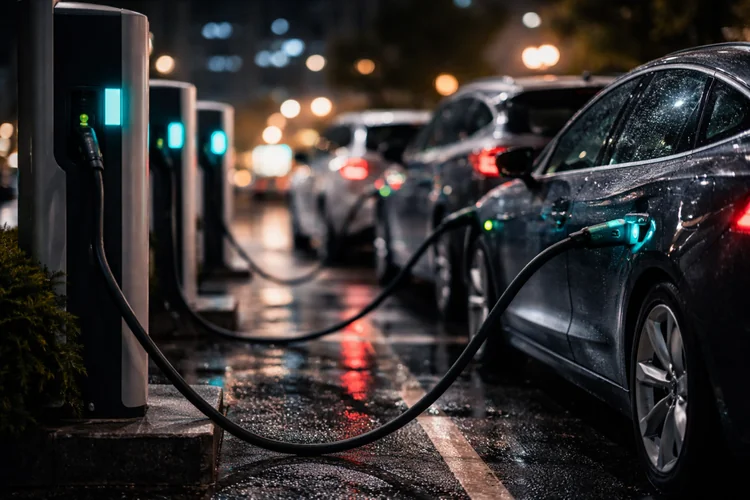
This section builds a realistic template you can adapt to HVAC load shifting, EV charging, or battery dispatch. The environment is simplified, but it includes time series, inertia, and trade-offs that make DR control real.
We’ll generate a synthetic dataset shaped like operational signals. Then we’ll implement a Gym-like environment and a DQN agent, including stability fixes that matter in applied work.
This is a training and prototyping scaffold, not a production controller.
Real deployments require higher-fidelity validation, safety layers, and evaluation across seasons and rare events.
Step 1: Generate time-series signals (prices, carbon intensity, weather)
In a real DR pipeline, you would load market prices and grid carbon signals from trusted sources and weather from a forecast API or archive. For a tutorial that remains runnable anywhere, we’ll synthesize these signals with a daily and weekly structure plus noise.
import numpy as np
import pandas as pd

def make_synthetic_dr_timeseries(
    n_days: int = 120,
    freq_minutes: int = 60,
    seed: int = 7
) -> pd.DataFrame:
    rng = np.random.default_rng(seed)
    steps_per_day = int(24 * 60 / freq_minutes)
    n_steps = n_days * steps_per_day

    ts = pd.date_range("2025-01-01", periods=n_steps, freq=f"{freq_minutes}min")

    hour = ts.hour.values
    dow = ts.dayofweek.values

    # Price: daily pattern + noise (e.g., higher evening, lower night)
    base_price = 0.18 + 0.06 * np.sin((hour - 15) / 24 * 2 * np.pi)
    weekend_discount = np.where(dow >= 5, -0.02, 0.0)
    noise = rng.normal(0, 0.01, size=n_steps)
    price = np.clip(base_price + weekend_discount + noise, 0.05, 0.60)  # €/kWh

    # Carbon intensity: often lower midday (solar), higher evening (thermal peakers)
    carbon = 380 - 90 * np.sin((hour - 12) / 24 * 2 * np.pi) + rng.normal(0, 15, size=n_steps)
    carbon = np.clip(carbon, 150, 650)  # gCO2/kWh

    # Outside temperature: seasonal trend + daily swing
    day_index = np.arange(n_steps) / steps_per_day
    seasonal = 10 + 8 * np.sin(day_index / 365 * 2 * np.pi)
    daily_swing = 5 * np.sin((hour - 14) / 24 * 2 * np.pi)
    temp_out = seasonal + daily_swing + rng.normal(0, 0.8, size=n_steps)

    df = pd.DataFrame({
        "timestamp": ts,
        "price_eur_per_kwh": price,
        "carbon_g_per_kwh": carbon,
        "temp_out_c": temp_out
    })

    # Cyclic time features
    df["hour_sin"] = np.sin(2 * np.pi * df["timestamp"].dt.hour / 24)
    df["hour_cos"] = np.cos(2 * np.pi * df["timestamp"].dt.hour / 24)
    df["dow_sin"] = np.sin(2 * np.pi * df["timestamp"].dt.dayofweek / 7)
    df["dow_cos"] = np.cos(2 * np.pi * df["timestamp"].dt.dayofweek / 7)

    return df

df = make_synthetic_dr_timeseries()
df.head()
These features are not “ML decoration.” They reflect real DR structure, where time-of-day often explains a large fraction of variability in price and carbon.
Step 2: Create a Gym-like environment with thermal inertia
For an HVAC-like example, indoor temperature responds gradually to outside temperature and HVAC power. A first-order thermal model is crude, but it captures delayed response, which is central to DR control.
A simple thermal dynamic is:
Here, is HVAC power, and models leakage toward outdoor temperature. The term captures how strongly HVAC power changes indoor temperature.
We’ll use discrete HVAC power levels to keep the action space small and DQN-friendly. That matches practical systems where actuators expose a small number of safe setpoints or modes.
from dataclasses import dataclass

@dataclass
class StepInfo:
    energy_kwh: float
    cost_eur: float
    emissions_g: float
    comfort_violation_c: float

class DemandResponseEnv:
    """
    Minimal DR environment for HVAC-style control.
    Observations include price, carbon, outside temp, time encodings,
    indoor temperature, and previous action.
    """

    def __init__(
        self,
        df: pd.DataFrame,
        episode_days: int = 2,
        dt_hours: float = 1.0,
        t_set_c: float = 22.0,
        comfort_band_c: float = 1.0,
        hvac_power_levels_kw = (0.0, 1.0, 2.0, 3.5, 5.0),
        alpha: float = 0.08,   # thermal leakage toward outside temp
        beta: float = -0.25,   # cooling effect per kW (negative reduces temp)
        noise_std: float = 0.05,
        seed: int = 0
    ):
        self.df = df.reset_index(drop=True)
        self.episode_days = episode_days
        self.dt_hours = dt_hours

        self.t_set = t_set_c
        self.band = comfort_band_c

        self.hvac_levels = np.array(hvac_power_levels_kw, dtype=np.float32)
        self.n_actions = len(self.hvac_levels)

        self.alpha = alpha
        self.beta = beta
        self.noise_std = noise_std
        self.rng = np.random.default_rng(seed)

        self.steps_per_day = int(24 / dt_hours)
        self.max_steps = episode_days * self.steps_per_day

        self.idx = 0
        self.step_in_episode = 0
        self.t_in = None
        self.prev_action = 0

    def reset(self):
        max_start = len(self.df) - self.max_steps - 1
        self.idx = int(self.rng.integers(0, max_start))
        self.step_in_episode = 0

        self.t_in = float(self.t_set + self.rng.normal(0, 0.5))
        self.prev_action = 0

        return self._get_obs()

    def _get_obs(self):
        row = self.df.iloc[self.idx]
        obs = np.array([
            row["price_eur_per_kwh"],
            row["carbon_g_per_kwh"],
            row["temp_out_c"],
            row["hour_sin"], row["hour_cos"],
            row["dow_sin"], row["dow_cos"],
            self.t_in,
            float(self.prev_action) / (self.n_actions - 1)
        ], dtype=np.float32)
        return obs

    def step(self, action: int):
        action = int(np.clip(action, 0, self.n_actions - 1))
        hvac_kw = float(self.hvac_levels[action])

        row = self.df.iloc[self.idx]
        price = float(row["price_eur_per_kwh"])
        carbon = float(row["carbon_g_per_kwh"])
        t_out = float(row["temp_out_c"])

        noise = float(self.rng.normal(0, self.noise_std))
        t_next = self.t_in + self.alpha * (t_out - self.t_in) + self.beta * hvac_kw + noise

        energy_kwh = hvac_kw * self.dt_hours
        cost_eur = price * energy_kwh
        emissions_g = carbon * energy_kwh

        comfort_violation = max(0.0, abs(t_next - self.t_set) - self.band)

        # Reward weights represent domain priorities (cost vs comfort vs carbon).
        lambda_comfort = 2.0
        lambda_carbon = 0.001

        reward = - (cost_eur + lambda_comfort * comfort_violation + lambda_carbon * emissions_g)

        self.t_in = t_next
        self.prev_action = action
        self.idx += 1
        self.step_in_episode += 1

        done = (self.step_in_episode >= self.max_steps)
        obs = self._get_obs()

        info = StepInfo(
            energy_kwh=energy_kwh,
            cost_eur=cost_eur,
            emissions_g=emissions_g,
            comfort_violation_c=comfort_violation
        )

        return obs, float(reward), done, info
This environment makes reward components explicit. In real DR work, you often report cost, carbon, and comfort separately, even if you train on a combined reward.
Step 3: Normalize observations for stability
DR features live on different scales, and that can destabilize Q-learning. Prices might be around –, carbon might be –, and indoor temperature around –.
A simple normalization step reduces gradient noise and helps the network learn useful representations. In production, compute these stats from training data and version them with the model artifact.
obs_mean = np.array([
    df["price_eur_per_kwh"].mean(),
    df["carbon_g_per_kwh"].mean(),
    df["temp_out_c"].mean(),
    df["hour_sin"].mean(), df["hour_cos"].mean(),
    df["dow_sin"].mean(), df["dow_cos"].mean(),
    22.0, 0.5
], dtype=np.float32)

obs_std = np.array([
    df["price_eur_per_kwh"].std(),
    df["carbon_g_per_kwh"].std(),
    df["temp_out_c"].std(),
    df["hour_sin"].std(), df["hour_cos"].std(),
    df["dow_sin"].std(), df["dow_cos"].std(),
    2.0, 0.3
], dtype=np.float32)

obs_std = np.maximum(obs_std, 1e-3)

def normalize_obs(obs: np.ndarray, mean: np.ndarray, std: np.ndarray) -> np.ndarray:
    return (obs - mean) / std
Step 4: Implement DQN in PyTorch (replay + target network + clipping)
A DR controller needs stable learning more than it needs fancy architectures. That’s why we’ll focus on replay buffers, target network updates, and gradient clipping.
We’ll also use Huber loss (SmoothL1Loss) because TD errors can spike when prices jump or delayed dynamics kick in. That “spikiness” is common in DR because the system response is not instantaneous.
import torch
import torch.nn as nn
import torch. optim as optim
from collections import deque
import random

device = torch.device("cuda" if torch.cuda.is_available() else "cpu")

class ReplayBuffer:
    def __init__(self, capacity: int = 200_000):
        self.buffer = deque(maxlen=capacity)

    def add(self, s, a, r, s2, done):
        self.buffer.append((s, a, r, s2, done))

    def sample(self, batch_size: int):
        batch = random.sample(self.buffer, batch_size)
        s, a, r, s2, d = zip(*batch)
        return (
            torch.tensor(np.array(s), dtype=torch.float32, device=device),
            torch.tensor(a, dtype=torch.int64, device=device),
            torch.tensor(r, dtype=torch.float32, device=device),
            torch.tensor(np.array(s2), dtype=torch.float32, device=device),
            torch.tensor(d, dtype=torch.float32, device=device),
        )

    def __len__(self):
        return len(self.buffer)

class QNetwork(nn.Module):
    def __init__(self, obs_dim: int, n_actions: int):
        super().__init__()
        self.net = nn.Sequential(
            nn.Linear(obs_dim, 128),
            nn.ReLU(),
            nn.Linear(128, 128),
            nn.ReLU(),
            nn.Linear(128, n_actions)
        )

    def forward(self, x):
        return self.net(x)

@torch.no_grad()
def select_action(q_net, obs, eps: float, n_actions: int):
    if random.random() < eps:
        return random.randrange(n_actions)
    obs_t = torch.tensor(obs[None, :], dtype=torch.float32, device=device)
    q_vals = q_net(obs_t)
    return int(torch.argmax(q_vals, dim=1).item())
Step 5: Train and log domain metrics (cost, emissions, comfort)
In DR, reward alone is not a sufficient report. Stakeholders care about energy cost, comfort violations, and increasingly emissions exposure.
The training loop below logs those metrics per episode. It also uses warm-up steps before training, because early training on tiny replay buffers can destabilize DQN.
def train_dqn(
    df: pd.DataFrame,
    n_episodes: int = 400,
    warmup_steps: int = 2_000,
    batch_size: int = 128,
    gamma: float = 0.99,
    lr: float = 1e-3,
    target_update_every: int = 500,
    train_every: int = 1,
    max_grad_norm: float = 10.0,
    eps_start: float = 1.0,
    eps_end: float = 0.05,
    eps_decay_steps: int = 50_000,
):
    env = DemandResponseEnv(df=df, episode_days=2, dt_hours=1.0, seed=0)
    obs_dim = env.reset().shape[0]

    q_net = QNetwork(obs_dim, env.n_actions).to(device)
    target_net = QNetwork(obs_dim, env.n_actions).to(device)
    target_net.load_state_dict(q_net.state_dict())
    target_net.eval()

    optimizer = optim.Adam(q_net.parameters(), lr=lr)
    replay = ReplayBuffer(capacity=200_000)
    huber = nn.SmoothL1Loss()

    global_step = 0
    history = []

    for ep in range(n_episodes):
        obs = env.reset()
        obs = normalize_obs(obs, obs_mean, obs_std)

        ep_reward = 0.0
        ep_cost = 0.0
        ep_emissions = 0.0
        ep_comfort_violation = 0.0

        done = False
        while not done:
            frac = min(1.0, global_step / eps_decay_steps)
            eps = eps_start + frac * (eps_end - eps_start)

            action = select_action(q_net, obs, eps, env.n_actions)
            obs2, reward, done, info = env.step(action)
            obs2 = normalize_obs(obs2, obs_mean, obs_std)

            replay.add(obs, action, reward, obs2, done)

            obs = obs2
            ep_reward += reward
            ep_cost += info.cost_eur
            ep_emissions += info.emissions_g
            ep_comfort_violation += info.comfort_violation_c

            global_step += 1

            if len(replay) >= warmup_steps and (global_step % train_every == 0):
                s, a, r, s2, d = replay.sample(batch_size)

                q_vals = q_net(s).gather(1, a.unsqueeze(1)).squeeze(1)

                with torch.no_grad():
                    next_q = target_net(s2).max(dim=1).values
                    target = r + gamma * next_q * (1.0 - d)

                loss = huber(q_vals, target)

                optimizer.zero_grad()
                loss.backward()
                nn.utils.clip_grad_norm_(q_net.parameters(), max_grad_norm)
                optimizer.step()

            if global_step % target_update_every == 0:
                target_net.load_state_dict(q_net.state_dict())

        history.append({
            "episode": ep,
            "reward": ep_reward,
            "cost_eur": ep_cost,
            "emissions_g": ep_emissions,
            "comfort_violation": ep_comfort_violation,
            "epsilon": eps
        })

        if (ep + 1) % 25 == 0:
            last = history[-1]
            print(
                f"Ep {ep+1:4d} | reward {last['reward']:.2f} | "
                f"cost €{last['cost_eur']:.2f} | "
                f"emissions {last['emissions_g']:.0f} g | "
                f"comfort {last['comfort_violation']:.2f} | eps {last['epsilon']:.2f}"
            )

    return q_net, pd.DataFrame(history)

# Example:
# q_model, train_log = train_dqn(df)
Step 6: Evaluate against baselines that make sense in energy systems
A DR model should beat a baseline that reflects how buildings are typically controlled. For HVAC, a baseline might be a fixed “medium power” strategy or a thermostat-like rule.
A second baseline is a price-threshold policy. It’s simple, interpretable, and sometimes hard to beat if your MDP or reward is poorly specified.
@torch.no_grad()
def run_policy(env: DemandResponseEnv, action_fn, episodes: int = 20):
    results = []
    for _ in range(episodes):
        obs = env.reset()
        obs = normalize_obs(obs, obs_mean, obs_std)

        total_reward = 0.0
        total_cost = 0.0
        total_emissions = 0.0
        total_comfort = 0.0

        done = False
        while not done:
            action = action_fn(obs)
            obs2, reward, done, info = env.step(action)
            obs2 = normalize_obs(obs2, obs_mean, obs_std)

            total_reward += reward
            total_cost += info.cost_eur
            total_emissions += info.emissions_g
            total_comfort += info.comfort_violation_c

            obs = obs2

        results.append({
            "reward": total_reward,
            "cost_eur": total_cost,
            "emissions_g": total_emissions,
            "comfort_violation": total_comfort
        })

    return pd.DataFrame(results)

def make_dqn_action_fn(q_net, n_actions):
    def fn(obs):
        return select_action(q_net, obs, eps=0.0, n_actions=n_actions)
    return fn

def make_fixed_action_fn(action: int):
    def fn(obs):
        return action
    return fn

# Example evaluation:
# eval_env = DemandResponseEnv(df, episode_days=2, dt_hours=1.0, seed=123)
# dqn_df = run_policy(eval_env, make_dqn_action_fn(q_model, eval_env.n_actions))
# fixed_df = run_policy(eval_env, make_fixed_action_fn(action=2))  # always choose mid power
# print(dqn_df.mean())
# print(fixed_df.mean())
When you report results, don’t just report the mean reward. Report mean cost, mean comfort violation, and mean emissions so domain stakeholders can interpret trade-offs.
Stable training in practice: why DR makes RL brittle and how to fix it
Demand response environments produce delayed and multi-objective learning signals. That combination is exactly where deep RL can become unstable, even when the code is “correct.”
One common instability is Q-value explosion driven by scale mismatch. If carbon and cost terms produce rewards at very different magnitudes, TD targets become noisy, and the optimizer chases outliers.
Normalization helps, but reward scaling is often necessary too. A practical approach is to log each reward component distribution and keep them in comparable ranges before summing.
Overestimation bias is another frequent issue with vanilla DQN. A robust improvement is Double DQN, which reduces bias by decoupling action selection from action evaluation.
Double DQN uses a target like:
Here is the core Double DQN target update pattern:
# Double DQN target (replace the vanilla max over target_net with this):
with a torch.no_grad():
    next_actions = q_net(s2).argmax(dim=1)  # select with online net
    next_q = target_net(s2).gather(1, next_actions.unsqueeze(1)).squeeze(1)  # evaluate with target net
    target = r + gamma * next_q * (1.0 - d)
Episode design matters more than people expect. If episodes always start at midnight, the agent can overfit to a single daily trajectory and fail on shifted start times.
A simple fix is to randomize start indices, which this environment does in reset(). A second fix is to evaluate on out-of-sample weeks and seasons, because weather and tariffs shift over the year.
When DQN is not enough: actor–critic methods for continuous DR control
Many real DR actuators are continuous, even if dashboards present discrete settings. Battery power, variable-speed HVAC, and EV charging can often be controlled smoothly within bounds.
For continuous actions, actor–critic methods are usually a better match. They learn a policy network that outputs actions (or action distributions), and a critic that estimates values to reduce variance.
PPO is often chosen for its training stability and clear clipping objective. SAC is popular when you want strong performance and entropy-regularized exploration.
Even if you use PPO or SAC, the MDP design principles do not change. You still need a leakage-free state, realistic constraints, and reward/constraint logic that respects comfort and grid requirements.
In production, continuous policies are frequently paired with safety filters. This is normal engineering practice in control systems where failures have real costs.
Systems and operations: how DR RL runs in production

A demand response model is part of a larger system. If you cannot reliably ingest data, enforce constraints, and monitor outcomes, the best simulated policy will fail in the field.
Most teams train policies offline on historical data and simulation, then deploy inference online. This separation is useful because training is compute-heavy and risky, while inference must be predictable and safe.
Batch ETL is common for training and evaluation. Streaming ingestion is common for live control, where you consume telemetry and price signals every few minutes or hourly.
You also decide where inference runs. Edge inference reduces latency and keeps sensitive data local, while cloud inference simplifies monitoring and rollouts.
Observability needs both ML signals and domain signals. In DR, you track action distributions and latency, but you also track comfort violations, peak demand, and program compliance.
Model monitoring should treat constraint violations as incidents. A policy that saves money but increases discomfort is not “degraded performance”; it’s a failure mode that should trigger fallbacks.
Fallbacks should be designed early. A safe, rule-based controller that maintains comfort is both a baseline and a safety net for RL deployments.
Risk, ethics, safety, and governance
Demand response touches people’s lived environments: homes, offices, schools, and hospitals. That makes safety, fairness, and transparency as important as algorithmic performance.
Fairness concerns appear when discomfort is distributed unevenly. A cost-minimizing controller might shift the burden onto occupants with less flexibility or onto older buildings that lose temperature faster.
A practical mitigation is to enforce per-site comfort constraints and track violations by segment. If some sites systematically experience more discomfort, that’s an equity and product problem, not just a tuning issue.
Privacy is central, especially for residential data. Fine-grained consumption can reveal occupancy patterns, routines, and sensitive behaviors, so data minimization and access controls are critical.
Security risk increases because DR controllers integrate with operational technology. Authentication, authorization, network segmentation, and audit logging are foundational when issuing control signals to devices.
Robustness is a final major concern.
Extreme weather and price spikes create out-of-distribution conditions where brittle policies can behave badly.
The engineering response is scenario testing and conservative rollout. Shadow-mode evaluation, canary deployments, and rollback rules translate well to DR.
Domain-specific scenario: carbon-aware load shifting for a building portfolio
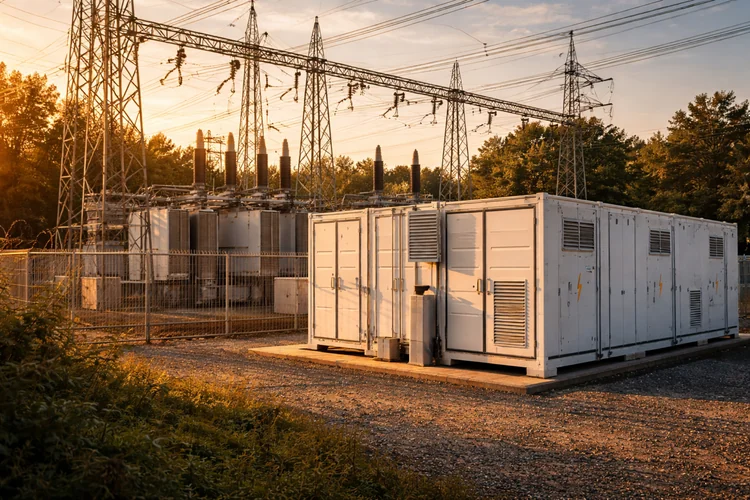
Imagine an organization managing a portfolio of commercial sites with HVAC and EV charging. They want to reduce cost, reduce emissions exposure, and stay within comfort constraints during occupied hours.
Data arrives from multiple sources with different reliability. Prices might be clean and hourly, while building sensors can be missing, miscalibrated, or delayed.
A reasonable project plan starts by building a simulation environment and validating MDP choices. You prototype with discrete actions and DQN because it makes debugging easier and verifies reward logic.
Once rewards and constraints are validated, you move to continuous control if devices support it. At that point, actor-critic methods become strong candidates because they produce smoother actuation and use flexibility better.
Evaluation should be done on held-out time periods. In energy, temporal generalization is critical because the same building behaves differently across seasons and occupancy.
Results should be communicated in domain metrics. Stakeholders will ask how much cost was saved, how much carbon exposure was reduced, and whether comfort was preserved.
Skills mapping and learning path
This project touches several high-value competencies. You practice time-series data handling, ML engineering in PyTorch, and systems thinking for safe deployment.
On the programming side, you strengthen Python fundamentals in a way that looks like real work. You define environments, structure training loops, and build evaluation pipelines that resemble production analytics.
On the ML side, you learn stability techniques that apply beyond RL. Normalization, careful splits, and monitoring are the same habits you need for forecasting and anomaly detection.
On the domain side, you learn to translate climate and economic objectives into measurable quantities. That interdisciplinary translation is what makes you valuable in energy, sustainability, and smart infrastructure roles.
A practical next step is to add peak demand charges and evaluate peak reduction. After that, implement Double DQN and compare stability, then try PPO or SAC for continuous actions.
If you want structured guidance and a clear roadmap to turn this into a portfolio-ready project, book a call with Code Labs Academy
Conclusion
Deep RL can fit demand response because DR is a sequential control problem with uncertainty and delayed effects. But DR also forces you to be honest about constraints, governance, and what “success” means outside a reward curve.
The strongest results come from getting the MDP right, measuring domain outcomes (cost, comfort, carbon), and shipping with safety checks. That’s where technical depth becomes real climate and infrastructure impact.

Learn technical skills online with Code Labs Academy
Join our supportive community, unlock your potential, and embark on a rewarding career path.
Apply Now