
Best Online Coding Bootcamps for Remote Learners in 2026 (Europe and North America)
Updated on January 20, 202612 minutes read
Remote learning makes tech education more accessible than ever, but it also creates new challenges. You're comparing programs across countries, time zones, and teaching styles, often while working, parenting, or managing a full schedule.
If you're searching for the best online coding bootcamps for remote learners in 2026, you likely want one thing: a reliable path to job-ready skills without relocating. You want structure, support, and a portfolio you can confidently show to employers.
This guide is built for adults in Europe and North America who want to switch careers, upskill quickly, or make a smart, practical investment in an online bootcamp.
What "best" means for remote learners in 2026
For remote learners, "best" isn't a fancy brand name or a long list of buzzwords. It's a program that helps you learn consistently, finish strong, and graduate with proof you can do the work.
The strongest online bootcamps in 2026 tend to share the same foundation: real instruction (not just videos), structured practice, frequent feedback, and a clear path to portfolio outcomes. They also respect the realities of remote life, including time zones, motivation dips, and the fact that you can't raise your hand in a classroom when you're stuck.
The remote learner advantage (and the remote learner risks)
Online bootcamps can be a perfect fit if you want flexibility and access to global programs. You can learn from London, Lisbon, Montreal, or a small town where the nearest campus is hours away.
Remote learning also mirrors how modern tech teams work. You'll practice async communication, documentation, and collaboration tools, which are skills that show up daily in remote-first jobs.
The risk is simple: without the right structure, online learning can drift. If a bootcamp is too self-directed, you can lose momentum fast, especially when life gets busy.
The three most common online bootcamp formats
Most online bootcamps fall into one of three models. Knowing the difference helps you avoid paying for the wrong learning style.
Live, cohort-based online bootcamps

These bootcamps run on a schedule with live classes, deadlines, and a group progressing together. Many learners find this format more motivating because it creates momentum and accountability.
Live online programs can be especially effective if you want real-time help, peer support, and a learning routine you can plan around.
Flexible, mentor-led online bootcamps
These programs are often self-paced week to week, with mentorship check-ins and structured project submissions. They can be a strong fit if you need flexibility because of work or family commitments. The key is feedback speed. If you're waiting days to get unblocked, progress slows, and frustration rises.
University-branded online bootcamps (often delivered by a partner)
Some online bootcamps are offered under a university brand but taught and operated by an education provider. These can be attractive if you like the structure and credibility of a university-linked certificate. Before enrolling, confirm who teaches, who provides career support, and what the day-to-day student experience looks like.
The decision checklist: how to compare online coding bootcamps confidently
You don't need to be a tech expert to evaluate a bootcamp. You just need to ask the right questions and look for clear, specific answers.
Curriculum relevance: Are you learning what employers hire for?
A strong program focuses on practical skills you'll use on the job. For software development, that usually means modern front-end fundamentals, backend basics, databases, and deployment skills. If the curriculum page is vague, outdated, or hard to access, treat that as a warning sign.
Portfolio outcomes: what will you graduate with?

Remote learners need visible proof of skills because employers can't "see" your effort. A strong bootcamp should guide you toward several projects that show progression, from smaller apps to a bigger capstone. Ask how projects are assessed, whether you get code reviews, and whether you'll build at least one team project you can speak about confidently in interviews.
Teaching and feedback: what happens when you get stuck?
In online learning, getting stuck is normal. What matters is how quickly you get help and how consistently you receive feedback. Look for office hours, instructor access, structured Q&A, and a clear system for reviewing your work.
Career support: is it practical, structured, and included?
Career support shouldn't be a vague promise like "we help you get hired." It should include a job-search strategy, CV/LinkedIn support, interview practice, and portfolio review. If you're applying in Europe, you may need guidance on different hiring timelines, languages, and expectations than in North America. The best bootcamps adapt career coaching to your market.
Time zones and scheduling: does the program fit your life?

Time zones can quietly make or break your experience. A bootcamp that looks perfect on paper becomes painful if live sessions happen at 22:00 in Central Europe or mid-workday in North America. Ask for a sample weekly schedule in your local time (CET/CEST, ET, PT) and confirm how attendance, recordings, and makeup sessions work.
Tuition, financing, and the real cost of your time
Tuition varies widely, and pricing is often listed in euros or dollars depending on where the provider is based. Beyond tuition, the "real cost" is time and focus.
Ask how many hours per week are expected, what happens if you fall behind, and whether you can pause or defer if life changes. If financing matters, look for transparent policies and flexible options (for example, see Code Labs Academy's financing options.
A shortlist of online bootcamps to compare in 2026
There isn't one universally "best" boot camp for everyone. The right choice depends on your schedule, support needs, and whether you want live classes or flexible pacing. Below are well-known options that offer online learning formats and remote delivery, making them relevant for Europe and North America comparisons.
Live online bootcamps with structured cohorts
Code Labs Academy
Code Labs Academy offers remote-first programs built for online participation, with clear pacing options and a practical, career-focused structure. If you want to browse tracks quickly, start with the Programs hub.
You can choose a role-focused track like the Web Development Bootcamp, Data Science & AI Bootcamp, Cyber Security Bootcamp, or UX/UI Design Bootcamp.
For many career changers, the difference is support and execution. Code Labs Academy also highlights structured help through its Career Services, including guidance around portfolio presentation and job-search preparation.
If you're shortlisting programs, a simple next step is to schedule a call with an advisor to confirm fit, timelines, and expectations.
Le Wagon
Le Wagon runs online cohorts and is known for a structured, intensive learning rhythm. If you like fast-paced deadlines and a cohort environment, it's worth comparing. Before committing, confirm the time zone fit and how project feedback and mentoring work in the online format.
Ironhack
Ironhack offers remote options across several tech tracks and commonly supports both full-time and part-time pacing. This can be a good match if you want structure but need some flexibility. If you're comparing, ask how prework works, how live support is scheduled, and what the project review process looks like online.
WBS Coding School
WBS Coding School emphasizes live, interactive online learning and portfolio outcomes. If you thrive on routine and classroom-like structure, this model can work well remotely. For Europe-based learners, it can be helpful to compare how schedules, pricing, and career support align with your local market.
Fullstack Academy
Fullstack Academy is widely recognized for live online instruction and tech bootcamp tracks in North America. If you want a real-time cohort and you're in ET/PT, it can be a strong comparison option. If you're in Europe, confirm the live schedule is realistic over several months, especially during project-heavy weeks.
General Assembly
General Assembly provides software engineering training with online options and a long-standing presence in the bootcamp space. If you want a recognizable brand and structured curriculum, it can be worth exploring.
Because large providers can vary by cohort, ask to see current project examples and clarify how career support is delivered to online learners.
Flexible, mentor-led online programs (often part-time friendly)
Springboard
Springboard is known for mentor-led structure and flexible pacing, which can suit working adults. If you value autonomy but still want check-ins and feedback, this model can work. Make sure you understand feedback turnaround times and how portfolio reviews are handled.
CareerFoundry
CareerFoundry's mentor and tutor support model appeals to learners who want guidance without daily scheduled classes. If you're balancing other responsibilities, flexibility can make finishing more realistic. Ask how often you meet mentors and what support looks like during portfolio building.
TripleTen
TripleTen promotes online learning with structured timelines and projects. If you want a guided plan but prefer a more flexible schedule, it's worth comparing. Clarify what's live vs self-directed, and how coaching works during the job search phase.
4Geeks Academy
4Geeks Academy offers online options and highlights mentorship and career support in its positioning. For remote learners, the best fit often comes down to support hours and time zone alignment. If you're applying across regions, confirm how the program supports your target market's hiring expectations.
BrainStation
BrainStation offers online bootcamps and is often considered by professionals who need a schedule that works around a job. If evenings and weekends matter, compare the weekly workload and project expectations carefully. Ask how portfolio outputs are reviewed and how career preparation is structured for remote learners.
Which track should you choose?
Choosing a bootcamp is easier when you decide the role you're aiming for. The clearest path is the one that matches what you want to do day to day.
Web development and software engineering
If you like building things, solving logical problems, and writing code daily, web development is a strong starting point. You'll learn to create user-facing interfaces and connect them to data and services. If you want to see what a modern, job-focused track looks like, compare a program like Code Labs Academy's Web Development Bootcamp.
Data analytics and data science
If you enjoy working with numbers, trends, and business questions, data analytics can be a great fit. You'll typically work with spreadsheets, SQL, and analysis workflows that translate well into many industries. For an end-to-end track that includes portfolio-ready projects, explore something like the Data Science & AI Bootcamp.
Cybersecurity
Cybersecurity is a strong path if you're drawn to systems thinking, risk, and defense. The learning style often includes labs and scenarios, which can work well online if the program is structured and well-supported. If you want a structured remote path, see how a program like the Cyber Security Bootcamp is organized.
UX/UI design
UX/UI design is ideal if you care about how products feel and how people move through screens and workflows. It rewards empathy, clarity, and strong communication. If you're exploring design as a career switch, compare a portfolio-based option like the UX/UI Design Bootcamp.
How to choose based on your real life (not your "ideal" life)
Aboot camp only works if you can finish it. The best program for you is the one you can attend consistently for months. If you work full-time, a part-time schedule with predictable weekly deadlines is often more sustainable than an intense full-time sprint. If you can pause work or take a sabbatical, full-time immersion can accelerate results.
If you're in Europe considering a North America-based cohort, be honest about the time difference. Late-night classes might feel manageable for week one, but they get harder during project-heavy weeks.
What good career support looks like in practice
Career support should feel like a system, not a motivational speech. You want structured steps, feedback loops, and accountability. In practical terms, that means polishing your CV and LinkedIn, building a portfolio that matches your target roles, practicing interviews, and learning how to apply strategically instead of endlessly.
If career support is important to you, compare what a dedicated center looks like, like Code Labs Academy's Career Services, and ask what's included, how long it lasts, and how personalized it is.
Where Code Labs Academy can help (without overcomplicating your plan)
If you want a remote-first bootcamp that combines job-ready training with portfolio building and structured career support, Code Labs Academy is a practical option to explore. Start with the online bootcamps and programs hub to compare tracks, pacing, and curriculum fit.
That combination matters for remote learners, because it supports three outcomes employers care about: skills you can demonstrate, projects you can show, and the confidence to communicate your work clearly in interviews. If you're shortlisting programs, you can schedule a call to talk through your goals and timeline, or go straight to the application page when you're ready.
Smart questions to ask before you enroll
Ask these questions on every admissions call, even if the program sounds perfect. Clear answers usually signal a well-run bootcamp. Ask how many hours per week are expected, how often you'll receive feedback, what your portfolio will include, and what happens if you miss a week due to work or life.
Then ask career questions: how interview prep works, whether you get portfolio reviews, and how long career support lasts after graduation. If you need a direct point of contact, use the Contact Us page to reach the team.
Red flags that remote learners should take seriously
If a bootcamp won't show you a detailed syllabus, avoids explaining projects, or dodges questions about teaching time, treat that as a sign to slow down. Be cautious if "career support" is only a few recorded videos or a generic checklist. Remote learners often need real feedback and real accountability to translate skills into job offers.
Also, be wary of unrealistic timelines. A bootcamp can absolutely change your career, but consistent practice and focused applications still take time.
A realistic success plan for remote learners
Start by choosing a role and a schedule you can maintain for at least three months. Consistency beats intensity when you're balancing real life.
During the program, focus on completing projects cleanly and documenting your work. Hiring managers love candidates who can explain decisions, trade-offs, and results.
After graduation, treat job search like a structured routine. Set weekly targets for applications, networking, interview practice, and portfolio improvements, and keep momentum even when responses are slow.
If you want structured prep materials before you commit, you can also explore free resources in the Code Labs Academy Learning Hub.
Conclusion: choose the bootcamp you can finish and use
The best online coding bootcamp in 2026 is the one that fits your time zone, supports you when you're stuck, and graduates you with a portfolio that proves your skills.
Use the criteria in this guide to compare programs across Europe and North America, and prioritize structure, feedback, and career support over hype.
When you're ready to take the next step, explore Code Labs Academy's online bootcamps and apply to the program that matches your goals and schedule.
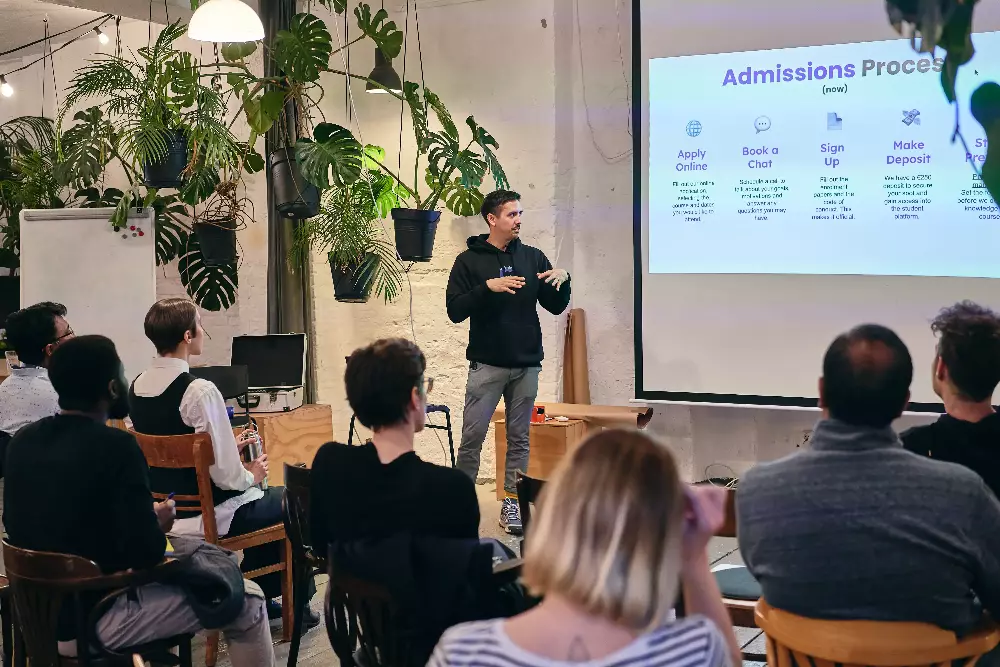
Learn technical skills online with Code Labs Academy
Join our supportive community, unlock your potential, and embark on a rewarding career path.
Apply Now